
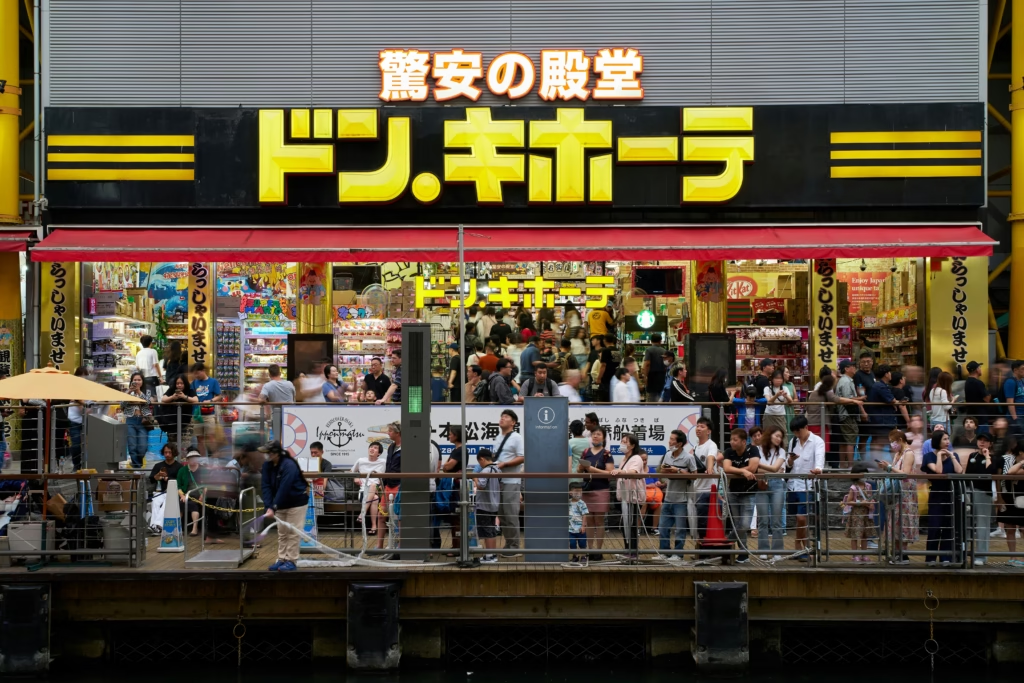
When I first moved to Japan, I thought “100 yen stores” were just Japan’s version of dollar shops — cheap, low-quality, and mostly for small household stuff. But after five years here, I can confidently say: Japan’s 100 yen stores are something else entirely. They’re not just shops; they’re a reflection of Japan’s minimalist, efficient, and design-driven culture.
What Are 100 Yen Stores, Really?
100 yen stores (like Daiso, Seria, and Can★Do) are retail chains where most items cost 100 yen, roughly $0.70 USD. You can find everything — from stationery and kitchen tools to travel gadgets and even surprisingly stylish home decor.
What makes them so uniquely Japanese is not the low price, but the attention to detail and practicality. Every product feels as if someone genuinely thought about how you’d use it in your daily life — and then made it beautiful and affordable.
🏠 For example: The silicone kitchen tools I bought from Daiso five years ago are still perfectly fine. I use them every morning when making breakfast in my tiny Kyoto apartment.
The Philosophy Behind Japan’s Affordable Quality
Japan’s culture values functionality, simplicity, and respect for materials — ideas deeply connected to the concept of mottainai (the regret of wasting). This mindset shapes everything, including how people shop.
Instead of throwing money at luxury items, Japanese consumers often seek balance: quality within reason. That’s why even something as cheap as a 100-yen product still performs well. It’s minimalism in action — not just aesthetics, but a way of life.
If you’ve read my article on 🏡 How Japanese Minimalism Changed My Life, you’ll understand how this philosophy shows up in daily choices — from interior design to what kind of spoon you buy.
Everyday Life in a 100 Yen World
In my first year in Japan, I practically lived off Daiso. I bought my first set of chopsticks, laundry clips, cleaning tools, and even travel pouches there. Over time, I noticed something fascinating — locals shop there regularly, not just foreigners or students.
Office workers come in after lunch to grab organizers for their desks. Housewives pick up seasonal decorations. High school students rush in for cute stationery.
There’s also a certain joy in walking down those neatly arranged aisles — it feels almost meditative. The stores are quiet, clean, and perfectly arranged. Every item has its place.
It’s almost a metaphor for Japan itself: small, efficient, humble, and deeply satisfying.
100 Yen Stores Are Sustainable, Too
What many people don’t realize is how eco-conscious many of these shops are becoming. Seria, for example, focuses on natural materials and avoids plastic packaging whenever possible.
If you care about sustainability, you might enjoy how easy it is to live more responsibly in Japan — even on a budget. For example, reusable chopsticks, bamboo toothbrushes, and refillable bottles are all available at these shops for a few coins.
It’s one reason why Japan ranks highly in eco-lifestyle indexes (source: Statista, 2025).
Hidden Gems: What to Actually Buy
After years of exploring every aisle, here’s my personal list of must-buy 100 yen items that truly deliver value:
- Stationery – Japanese pens and notebooks are world-class. Daiso’s gel pens are smoother than many $5 pens back home.
- Kitchen tools – From rice paddles to silicone molds, everything is smartly designed for tiny kitchens.
- Travel accessories – Cable organizers, mini bottles, and foldable bags. Lifesavers for weekend trips.
- Cleaning items – Compact, efficient, and often with natural scents.
- Home organization tools – Stackable boxes and hooks that can transform even the smallest Tokyo apartment.
If you’re interested in small-space living, check out my post 🏠 Why Japanese Apartments Are So Small — these 100-yen tools are practically made for them.
What 100 Yen Stores Teach You About Japan
After years of living here, I’ve realized these shops reflect something profound about Japan:
they teach you to appreciate simplicity without feeling deprived.
You start to see beauty in well-made, inexpensive things. You realize that a life of quality doesn’t have to mean luxury — it means intention.
When I go back to my home country and walk into a “dollar store,” I immediately miss the Japanese sense of purpose. In Japan, even cheap items are made with heart.
Final Thoughts
So, if you ever come to Japan, don’t underestimate the humble 100 yen shop. Spend an hour wandering through Daiso or Seria, and you’ll come out not just with a bag full of smart items — but a deeper understanding of how Japan turns everyday life into an art form.
“In Japan, even a 100 yen purchase can feel like a lesson in design and mindfulness.”
Discover more from Ali in Japan
Subscribe to get the latest posts sent to your email.