When people think of Japan’s work culture, they often imagine long hours, strict hierarchies, and endless overtime.
That stereotype still exists — but Japan in 2025 is not the Japan of the early 2000s.
After five years of living here and working with both Japanese and international teams, I’ve seen real change.
Slow, but steady.
This new work era in Japan is surprisingly flexible, digital, and more open to foreign talent than ever before.
1️⃣ The End of the “Salaryman” Era
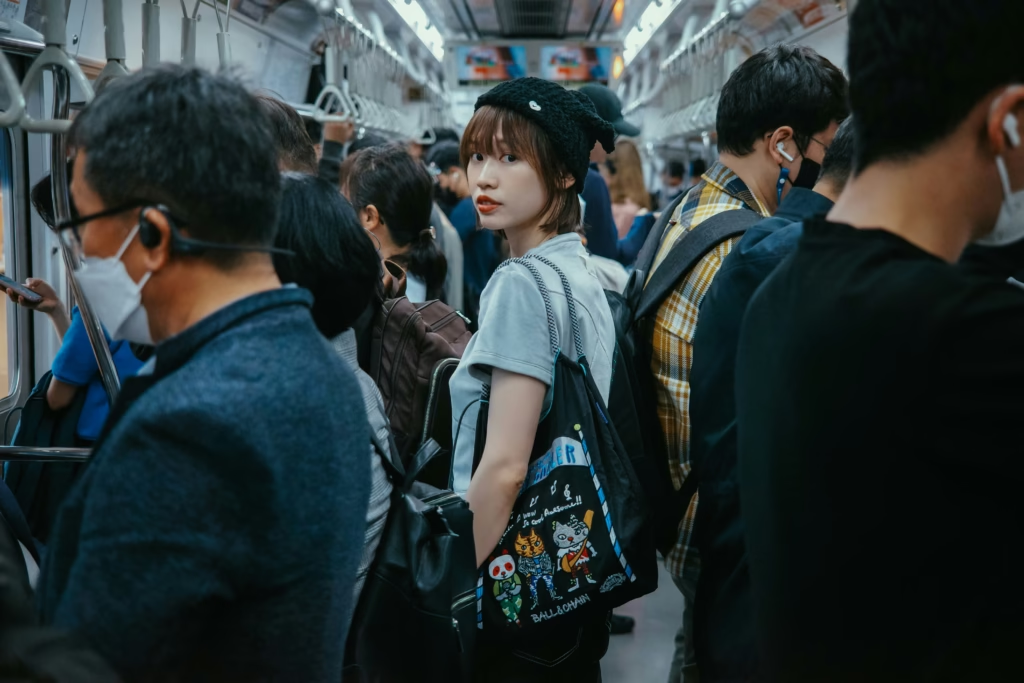
The image of the classic salaryman — suit, briefcase, late trains, and after-work drinking — is fading.
You’ll still see it in Tokyo’s business districts, but many companies now prioritize work-life balance.
Big corporations like Panasonic and Fujitsu have introduced remote work systems and four-day weeks.
Even traditional firms are starting to question the old “live to work” mindset.
👉 Related: 🧘♂️ Why Living in Japan Is Both Heaven and Hell (My Honest Truth)
2️⃣ Remote Work Is Here to Stay
COVID forced Japan — a country that once required physical presence — to embrace digital tools.
Now, Zoom, Slack, and Teams are part of daily office life.
I work partly in-person and partly remote, and it still feels strange to have meetings in sweatpants.
But it’s proof Japan is learning to adapt.
3️⃣ Workplaces Are Becoming More International
The number of foreign workers in Japan has grown past 2 million, and companies are starting to notice.
Even small firms now hire bilingual staff or offer English support.
I’ve seen job listings that explicitly say: “No Japanese required”.
That was almost unthinkable five years ago.
👉 Related: Japan Digital Nomad Visa: Your 2025 Guide
4️⃣ The Rise of Side Jobs (Fukugyō)
Until recently, most companies banned side jobs.
Now, that’s changing — especially among younger professionals and creatives.
From freelance translation to YouTube and design, more Japanese workers are exploring personal income sources.
Foreigners can now join this wave too, especially under the Business Manager Visa.
👉 Read also: Japan’s Business Manager Visa Reform: Old vs. New (2025 Update)
5️⃣ Mental Health Awareness Is Finally Emerging
Japan still struggles with overwork (karoshi), but mental health is no longer taboo.
More companies provide counseling, wellness leave, and flexible scheduling.
One of my Japanese coworkers once said:
“I don’t want to die for my company. I want to live because of my work.”
That sentiment would’ve been unthinkable a decade ago.
6️⃣ Foreigners Bring Change (Even Without Realizing It)
Foreign employees often challenge old habits — by accident.
Simple things like asking “why” instead of “yes” inspire new perspectives.
I’ve seen Japanese managers embrace new communication styles because of international teams.
It’s slow progress, but it’s real.
7️⃣ Work-Life Balance Is Becoming a Goal, Not a Dream
Japan’s Ministry of Health officially encourages shorter working hours and flexible time-off policies.
In big cities like Tokyo and Osaka, “family time” and “personal growth” are becoming part of job interviews.
Even nomikai (drinking parties) are now optional — a quiet revolution in social norms.
🌏 What This Means for Foreigners
If you’re planning to work or start a business in Japan, this is the best time in decades.
The environment is still formal, but the cracks are showing — and opportunity is flowing through them.
Foreign professionals, digital nomads, and bilingual talent are more welcome than ever.
Japan may still love tradition, but its future depends on openness.
💬 Final Thoughts
Japan’s work culture is in transition — not Western, not traditional, but something uniquely Japanese.
And that’s what makes it exciting.
For those of us living here, we’re not just watching change — we’re part of it.
Discover more from Ali in Japan
Subscribe to get the latest posts sent to your email.