Living in Japan Taught Me This the Hard Way
One of the biggest cultural shocks I experienced after moving to Japan wasn’t the language, the work culture, or even the rules.
It was realizing that many people around me were not showing who they really were.
At first, I thought Japanese people were just shy, reserved, or polite to a fault.
After years of living here, working here, and forming real friendships, I understood something deeper:
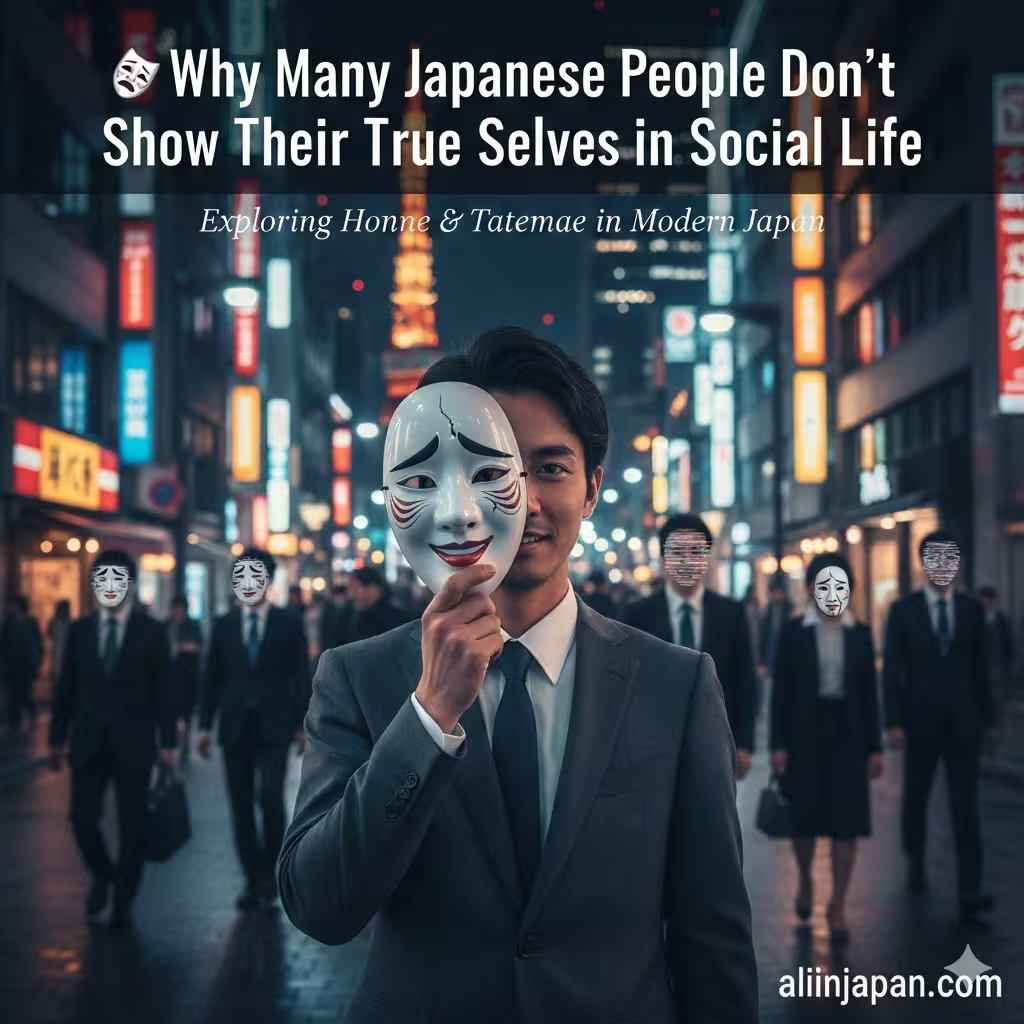
Japanese society often rewards people for playing roles — not for being themselves.
This article isn’t criticism.
It’s an honest attempt to explain why this happens, how it affects daily life, and what it feels like to witness it as a foreigner who lives here long-term.
Honne vs Tatemae: The Core of the Issue
If you live in Japan long enough, you’ll hear these two words:
- Honne (本音) → true feelings, real thoughts
- Tatemae (建前) → public face, socially acceptable behavior
This concept is often explained lightly in beginner culture guides, but the reality runs much deeper.
Tatemae isn’t just politeness.
It’s a survival mechanism in a society that values harmony above individuality.
Japanese people learn very early that:
- Saying what you truly think can disrupt group balance
- Standing out can create friction
- Emotional honesty can be risky
So instead, many people learn to perform the version of themselves that society expects.
Society Comes First — The Individual Comes Later (If Ever)
Japan is not an individual-first society.
From childhood, people are taught:
- Don’t inconvenience others
- Read the room
- Don’t be “that person”
- Blend in
This mindset continues into:
- School
- University
- Company life
- Even friendships
I’ve met people who were:
- Loud and funny once drunk
- Creative but stuck in rigid jobs
- Emotionally expressive in private, silent in public
And yet, at work or in public, they played their role perfectly.
Not because they wanted to — but because they felt they had to.
The Workplace: Where Masks Are Worn the Longest
Japanese work culture intensifies this phenomenon.
In many companies:
- Disagreeing openly is discouraged
- Questioning seniors is risky
- Expressing frustration is taboo
Employees often act:
- More enthusiastic than they feel
- More loyal than they are
- More motivated than reality
I’ve had Japanese coworkers who told me privately:
“I can’t say this at work.”
“If I act like myself, it causes problems.”
This constant emotional suppression takes a toll.
Related internal article:
👉 The Truth About Japanese Work Culture & Overtime
Why Emotional Distance Is So Common
Many foreigners interpret Japanese social behavior as cold or distant.
But it’s not a lack of emotion — it’s emotional control.
Showing strong emotions publicly can be seen as:
- Immature
- Disruptive
- Self-centered
So instead of honesty, people offer:
- Polite smiles
- Neutral responses
- Safe conversations
This is why:
- Compliments can feel vague
- Friendships take years to deepen
- “Yes” doesn’t always mean agreement
Related read:
👉 Why Japanese People Don’t Say “I Love You”
Drinking Culture: Where the Real Self Sometimes Escapes
If you want to see glimpses of honne, go to an izakaya.
Alcohol temporarily lowers the social barrier.
Suddenly:
- Quiet coworkers become outspoken
- Emotions spill out
- Complaints surface
There’s even a term for this:
“Nomikai honesty.”
But the next morning?
Everything resets.
What was said over drinks is often treated as if it never happened.
This tells you something important:
Society allows emotional release — but only in controlled, temporary spaces.
The Mental Health Cost No One Talks About
This constant role-playing has consequences.
Japan struggles with:
- Burnout
- Loneliness
- Emotional isolation
Yet mental health conversations are still limited compared to Western countries.
Many people feel:
- Trapped between who they are and who they’re expected to be
- Afraid to disappoint family, company, or society
- Guilty for wanting something different
External reference (Japan Times):
https://www.japantimes.co.jp/news/2023/mental-health-japan-work-culture/
Why Foreigners Notice This More Clearly
As a foreigner, you’re often outside the system.
You’re allowed to:
- Be direct
- Ask uncomfortable questions
- Break small social norms
This creates an interesting dynamic:
Japanese friends may feel more comfortable being honest with you — because you’re not part of the same social hierarchy.
I’ve had people tell me things they would never say to another Japanese person.
It made me realize:
Many people here want to be real — they just don’t feel safe doing it publicly.
Is This Changing in Younger Generations?
Slowly — yes.
Younger people:
- Change jobs more easily
- Question traditional expectations
- Value personal happiness more
Remote work, global exposure, and social media are reshaping norms.
But change in Japan is gradual.
Deep-rooted values don’t disappear overnight.
Related internal article:
👉 Why Japan’s Work Culture Is Changing
https://aliinjapan.com/why-japans-work-culture-is-changing-and-what-it-means-for-foreigners/
How This Changed the Way I See Japan (And Myself)
Living here forced me to reflect on my own identity.
Japan taught me:
- The power of emotional restraint
- The importance of social awareness
- The cost of constant self-suppression
I’ve learned to balance:
- Honesty with tact
- Individuality with respect
- Expression with timing
Japan didn’t make me less myself —
It made me more aware of when and how to be myself.
Final Thoughts: It’s Not Fake — It’s Protective
Japanese people aren’t fake.
They’re navigating a society where:
- Harmony matters deeply
- Standing out carries consequences
- Roles offer safety
Once you understand this, interactions make more sense.
And friendships, when they form, feel deep and meaningful.
If you live in Japan long enough, you realize:
Behind the mask, there’s a very human story.
Discover more from Ali in Japan
Subscribe to get the latest posts sent to your email.