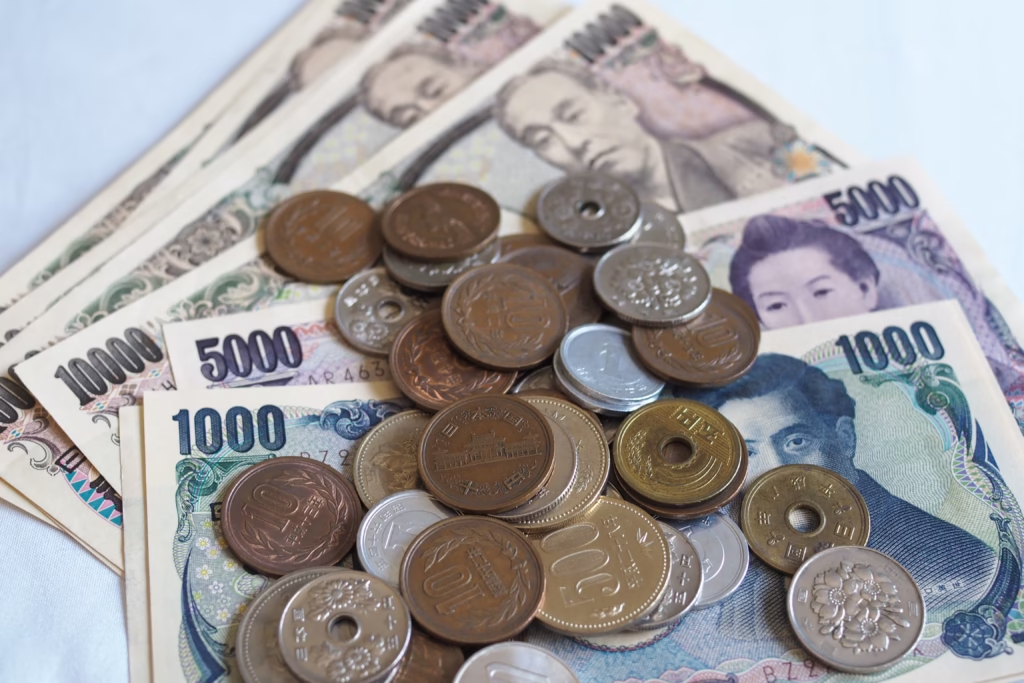
When I first moved to Japan, I was shocked to see people paying for everything in cash — from rent to ramen.
Coming from a country where Apple Pay and credit cards ruled, it felt… old-fashioned.
But after living here for five years, I’ve realized Japan’s love of cash isn’t about technology — it’s about trust, culture, and control.
🏦 A Society Built on Trust
Japan is one of the few countries where you can drop your wallet on the street and get it back — often with every yen still inside.
That’s not an urban legend. It’s reality.
In 2022, Tokyo’s lost-and-found offices reported more than ¥3.9 billion yen returned to their rightful owners (Tokyo Metropolitan Police data).
That’s a level of honesty and trust that naturally extends to cash.
For many Japanese, using physical money feels safer and more personal — a quiet nod to how seriously people here take responsibility and integrity.
Related: 🇯🇵 Why Japan Feels Safer Than the U.S. (Even at 2 A.M.)
🪙 Tradition Over Technology
You might expect Japan, the birthplace of robots and bullet trains, to be fully cashless.
But step into any small restaurant or countryside inn, and you’ll still see the humble cash register and a polite bow as you hand over your bills.
That’s not resistance to innovation — it’s respect for ritual.
Money exchanges here are precise and respectful.
The cashier places your change carefully in a tray, facing the right direction.
No rushing, no crumpled bills.
It’s a reminder that transactions are part of human connection, not just economic exchange.
💳 The Slow Shift to Cashless
Japan is changing — slowly.
Big cities like Tokyo and Osaka now see more digital payment options: Suica, Pasmo, PayPay, Line Pay.
Convenience stores and train stations accept most cards, and even some temples allow contactless donations.
But still, over 50% of payments in Japan are made with cash, according to the Bank of Japan’s 2024 report.
And you’ll always find moments where cash saves the day:
- At small family-run ramen shops 🍜
- In countryside ryokans 🏯
- During festivals and street markets 🎆
- When vending machines only take coins (yes, still!)
💼 Personal Reflection: Why I Started to Love Cash
At first, I saw Japan’s cash culture as inconvenient.
Now, I see it as grounding.
There’s something surprisingly mindful about physically counting out coins, handing them with two hands, and saying “ありがとうございます (thank you very much).”
It creates a small but real moment of gratitude and connection.
In a world obsessed with speed and automation, Japan’s cash culture feels almost rebellious — and deeply human.
🏧 Tips for Foreigners in 2025
If you’re planning to live or travel in Japan, here’s my honest advice:
- Always carry at least ¥10,000–¥20,000 yen in cash.
Some ATMs don’t accept foreign cards, especially in rural areas. - 7-Eleven ATMs are your best friend.
They accept almost all international cards and have English menus. - Use cash for small purchases — it’s often faster.
Especially at convenience stores or ramen shops. - Digital wallets are growing — try PayPay or Suica app.
But don’t rely on them 100%.
External Link: Bank of Japan – Cash Usage Statistics 2024
🪙 What Cash Teaches You About Japan
Living here, I’ve realized that Japan’s approach to cash mirrors its culture:
careful, considerate, and consistent.
Cash isn’t just money — it’s a symbol of respect.
Each transaction, no matter how small, is a chance to express appreciation and trust.
And in a world where we rarely slow down, that’s something worth holding onto.
Discover more from Ali in Japan
Subscribe to get the latest posts sent to your email.