
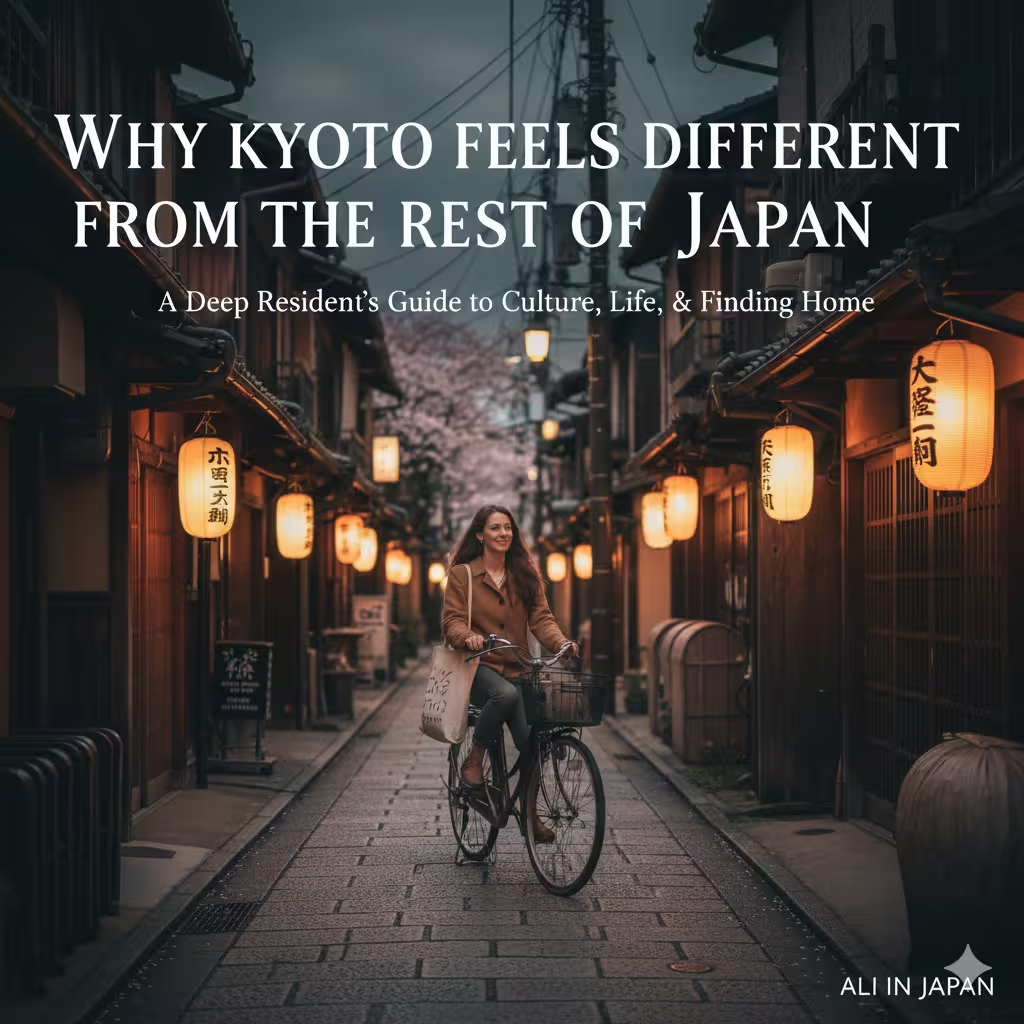
I lived in Kyoto for six years. At first it felt like a postcard city — temples, lantern-lit alleys and tea houses. After a few months it felt like home. After a few years I realized Kyoto isn’t just “different” for visitors: it’s different for residents. The difference is subtle, cultural, spatial and seasonal all at once. This guide will explain why Kyoto stands apart, and give you the practical roadmap you need if you’re planning to visit long-term, relocate, or simply understand what daily life here really looks like.
I’ll cover:
- Kyoto’s cultural DNA and how it shapes daily life
- Neighborhoods and where to live (concrete advice)
- Transport, connectivity, commuting and cost realities
- Work, study and education options
- Festivals, seasonal rhythms and how they affect residents
- Housing, permits, utilities, and moving tips
- Social integration, etiquette, and how to build a life here
- Pros and cons — and a 12-month sample plan to settle in
Where it helps, I include links to local official pages and practical resources you can use right away. For core facts about Kyoto’s cultural role, transport, festivals and city planning, see Kyoto City and the official Kyoto travel portal. 京都市+1
1) Kyoto’s cultural DNA — why the city feels like a different tempo
Kyoto’s identity is the product of being Japan’s imperial capital for more than a millennium. That history created two things that still define daily life:
- Dense cultural continuity — temples, shrine rituals, seasonal crafts and centuries-old neighborhoods (machiya) remain embedded in daily life, not just tourism brochures. Kyoto’s public programs and cultural preservation are an active part of civic policy. 京都市
- Seasonal living — Kyoto’s urban design and everyday customs are shaped by the seasons (spring cherry blossoms, mid-summer evenings by the Kamogawa, brilliant autumn leaves), and this rhythm influences everything from menus in cafes to community events. The official Kyoto travel portal emphasizes art & culture and seasonal experiences as central to life here. Kyoto Travel
Together these create a slower, more reflective urban rhythm than you’d find in Tokyo or Osaka. Kyoto feels rooted, and that rootedness affects how people treat time, noise, and public space — they preserve it.
2) Neighborhoods: where to live and why it matters (practical breakdown)
Picking the right neighborhood in Kyoto is crucial: the city’s districts can feel like separate worlds.
Central / Nakagyo (Heart of the city)
- Pros: central shops, cafes, easy access to subway and bus routes; lively but not chaotic.
- Cons: higher rent for newer apartments, tourist traffic along major streets.
Good if you want a balance of convenience and local life.
Gion & Higashiyama (Historic, touristy by day)
- Pros: atmospheric streets, temples, close to cultural events.
- Cons: heavy tourist traffic in peak seasons; private alleys can have restrictions to protect residents. Locals may enforce “no-loiter” rules and some alleys limit tourist access to preserve residential life (local measures have been in the news). AP News
Kawaramachi / Shijo (Shopping & nightlife)
- Pros: shopping, restaurants, central nightlife.
- Cons: busier evenings, pricier pockets.
Arashiyama (Northwest, nature & slow life)
- Pros: beautiful nature, bamboo groves, calmer evenings.
- Cons: tourist peaks, longer commute to central business districts.
Sakyo / Kita (northern residential, near universities)
- Pros: quiet residential areas, near Kyoto University and many research institutes. Good for families and students. UniversityGuru
Fushimi (south, wine & sake culture)
- Pros: more suburban, famous for sake breweries, slightly cheaper housing.
- Cons: longer commute to central Kyoto.
How to choose: think about commute tolerance, noise sensitivity, whether you want a “local” neighborhood vs tourist atmosphere, and proximity to the type of work or school you’ll have.
3) Transport & connectivity — getting around Kyoto and beyond
Kyoto is compact and well connected:
- Trains & subways: JR lines (including Tokaido Shinkansen access at Kyoto Station), private lines (Hankyu, Keihan), and the subway network cover most commutes. Kyoto Station is the city’s gateway for Shinkansen and regional connections. Use JR/IC cards (ICOCA, Suica/Pasmo accepted) for convenience. Official travel pages explain routes and tourist-friendly maps. Kyoto Travel+1
- Buses: essential for reaching peripheral shrines and neighborhoods; major routes serve tourists and locals alike.
- Biking & walking: many residents bike short distances; Kyoto’s human-scale streets make walking enjoyable and practical.
- Commuting times: unlike Tokyo, commutes are often shorter; however, routes to Osaka or Kobe are straightforward by rapid train.
Tip: When apartment-hunting, map your morning route by train + walking time — what looks close on a map can add 15–30 minutes in transfers.
4) Cost of living / rent — realistic expectations
Kyoto is generally cheaper than Tokyo but more expensive than many regional cities. Rent, especially in popular central neighborhoods, can be competitive. Cost comparison tools and market reports indicate Kyoto rents are typically lower than Tokyo’s by a noticeable margin; however, desirable machiya or renovated properties carry premium prices. numbeo.com
Practical budgeting (monthly, single person, approximate):
- Rent (1K/1DK small apartment): ¥50,000–¥90,000 depending on location and age of building
- Utilities + internet: ¥10,000–¥15,000
- Food & groceries: ¥30,000–¥50,000
- Transport (commuter pass or IC top-ups): ¥6,000–¥12,000
- Health insurance/pension (if not employer-covered): variable — national insurance expected for residents
Tip: If you want a machiya (traditional townhouse), expect both higher rent and potential maintenance/renovation costs; some machiya are shared or managed as guesthouses.
5) Housing: documents, guarantors, and practicalities
Apartment renting in Kyoto follows Japanese norms:
- Shikikin (deposit), reikin (key money): many rentals still require upfront payments (varies by landlord/company).
- Guarantor (hoshounin): required in many contracts — if you don’t have a Japanese guarantor, rental agencies can arrange guarantor companies for a fee.
- Agency fees: one month’s rent typical.
Tip: Use bilingual real-estate agents that specialize in foreign residents if you lack Japan-level Japanese or a guarantor. They help with contracts, moving dates, and utility setups.
6) Work, study and education — options in Kyoto
Kyoto has a strong higher-education presence (Kyoto University, Doshisha, Ritsumeikan) and a vibrant research/creative sector. Universities bring students and a cultural energy distinct from the corporate centers in Tokyo. If you’re studying or working in academia, Kyoto is an excellent choice. UniversityGuru
For job seekers:
- Local industries include tourism, hospitality, traditional crafts, education (ALT, language teaching), research, and small-to-medium enterprises.
- Tokyo-level salaries are less common; negotiate based on living costs and consider job location — commuting into Osaka is an option for higher-paying roles.
7) Festivals, seasonal events and resident life
Kyoto’s festivals are central to resident life. Key events include:
- Gion Matsuri (July) — one of Japan’s most famous festivals (month-long with main processions).
- Aoi Matsuri (May) — ancient procession with Heian-era costume.
- Jidai Matsuri (October 22) — history parade through the city.
- Obon & local temple rites, plus neighborhood matsuri throughout summer and autumn. The city lists events and encourages responsible tourism. Kyoto Travel
Resident note: festival days and seasonal tourism can affect transport, business hours, and weekend plans. If you live in a festival neighborhood, expect both disruption (crowds) and community vibrancy (local involvement).
8) Overtourism — how it affects residents and rules to know
Kyoto’s popularity creates pressure. Measures to defend local life — signage restricting access to private alleys, rules around photography and behavior, and recent tourism policy changes — reflect real tensions between tourism and resident life. In recent news, the city and neighborhoods have pushed measures to protect everyday life from touristic disruption, including targeted restrictions and changes to accommodation tax policies. If you plan to live here long-term, expect a city that actively manages the line between welcoming visitors and protecting residents. AP News+1
9) Social life & integration — practical ways to make Kyoto feel like home
Kyoto’s social fabric is neighbor-based and ritual-rich. To integrate:
- Join a community class (tea ceremony, ikebana, pottery) — great for language, cultural depth and local friends.
- Volunteer at festivals or temple events — festivals are organized by neighborhoods; participation connects you with locals.
- Use university events or language-exchange meetups if you’re a student or near campuses.
- Respect local norms — quiet evenings, proper trash sorting, and polite public behavior go a long way. For everyday cultural adaptation see my post: The Unwritten Rules of Living in Japan.
10) Practical checklist for your first 12 months in Kyoto (sample plan)
Month 0–1: Arrival & basics
- Register at the ward office; get residence card and health insurance details (NHI or Shakai Hoken through employer).
- Open a bank account, get an IC transit card (ICOCA), and a local mobile plan.
- Short-term: use guesthouse or share-house while searching for long-term apartment.
Month 1–3: Settling in
- Attend neighborhood orientation; buy the local garbage calendar and learn separation rules.
- Explore nearby clinics (healthcare guide) and register with a GP.
Month 3–6: Social & services
- Join a class, sign up for language exchange, volunteer at a small festival.
- Get to know your chōnaikai (neighborhood association) if you live in a community-run area.
Month 6–12: Deeper integration
- Apply for local library card, explore seasonal communities (tea gatherings, shrine volunteer days), start long-term friendships.
- If staying long-term, look into home ownership or longer leases, local schools if you have kids, and carefully plan long-term finances and pension contributions.
11) Useful official & local resources
- Kyoto City Official — culture, services, resident guides. 京都市
- Kyoto Travel (official tourist portal) — events, getting around, seasons. Kyoto Travel
- JR West Kyoto area route map & train info (for commuting planning). westjr.co.jp
- Kyoto events & festivals (official calendar). Kyoto Travel
12) Pros & Cons — a quick summary for decision-making
Pros
- Deep cultural life, seasonal beauty, strong university & research presence.
- Walkable neighborhoods, human-scale city design, calm daily rhythm.
- High-quality local food, strong sense of place and community.
Cons
- Tourist crowds in peak seasons; overtourism pressure on neighborhoods.
- Certain services may be less internationalized than Tokyo.
- Housing competition for desirable traditional homes; some bureaucratic quirks (guarantor, key money).
Final Thoughts — how Kyoto changes you
Kyoto isn’t just a place you visit; living here changes how you perceive cities. It teaches you to slow down, appreciate ritual, and live with the seasons. It asks for respect: of neighbors, of rituals, and of quiet. For many people — myself included — that restraint opens up a deeper sense of belonging. Kyoto’s uniqueness comes from combining the intimacy of a small city with the cultural depth of a capital: that’s why it feels different — and why, for many, it feels like home.
Discover more from Ali in Japan
Subscribe to get the latest posts sent to your email.