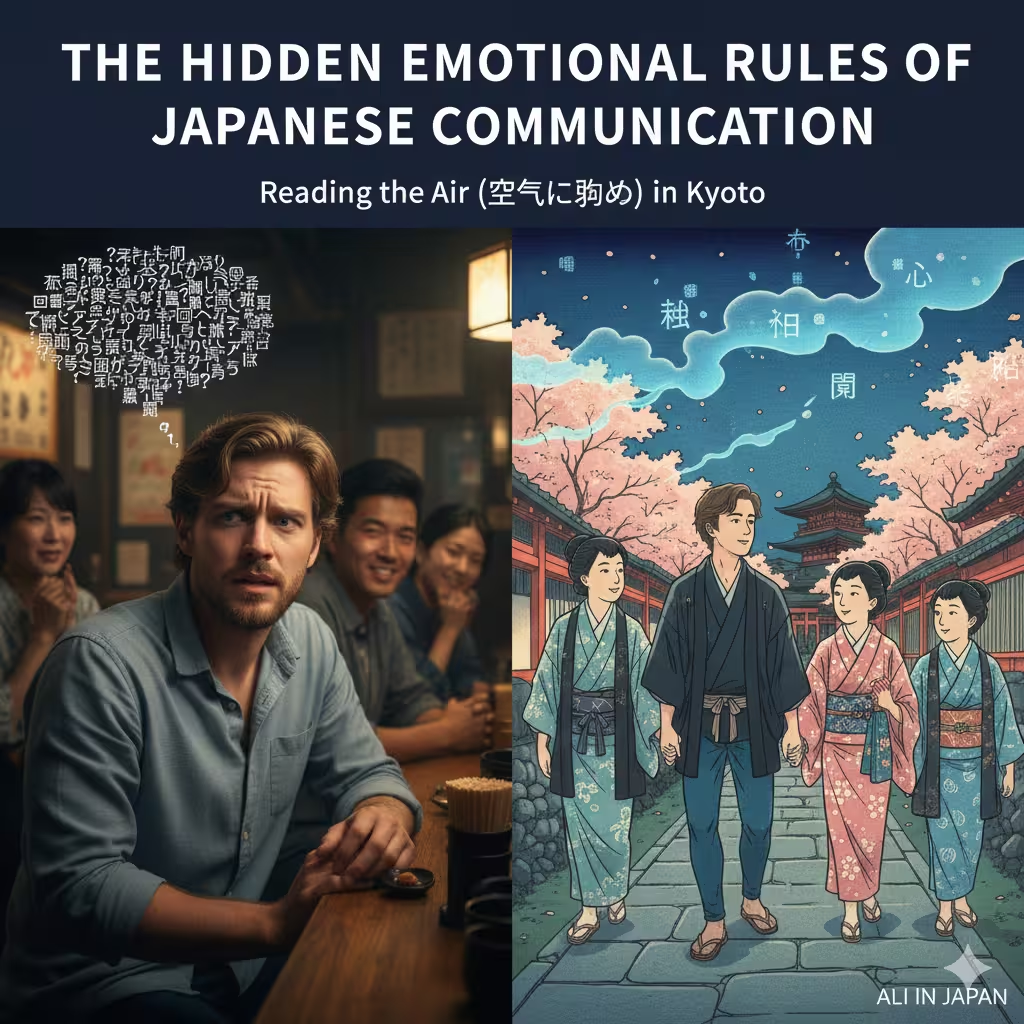
After six years of living in Kyoto, one thing became incredibly clear to me: Japan doesn’t communicate with words — it communicates with emotions, timing, silence, and shared understanding.
It doesn’t matter how many vocabulary apps you use or how many JLPT levels you pass. Without understanding the emotional rules beneath Japanese communication, you’ll always feel like something is slightly “off.” You’ll understand the literal meaning, but you’ll miss the real message.
This isn’t because Japanese people are vague or overly polite. It’s because communication here serves a different purpose:
👉 In the West, communication aims for clarity.
👉 In Japan, communication aims for harmony.
Once you understand that shift, Japan starts to make sense in ways textbooks never explained.
Honne and Tatemae: The Most Misunderstood Concept
You can’t talk about Japanese communication without mentioning honne (本音) and tatemae (建前).
- Honne = your true feelings
- Tatemae = what you express publicly to maintain social harmony
Westerners often think tatemae is dishonest, but it isn’t. It’s simply the understanding that your truth isn’t always the most important thing in a shared space.
For example:
“Let me think about it.”
→ Probably means “no.”
“It might be a little difficult…”
→ Definitely means “no.”
“We’ll check again.”
→ Means “no decision has changed, but we are staying polite.”
This isn’t manipulation — it’s compassion. It’s a way of avoiding direct conflict while preserving everyone’s dignity.
I wrote about this dynamic in the workplace here:
https://aliinjapan.com/the-truth-about-japanese-work-culture-overtime-hierarchy/
“Reading the Air” — Kültürel Bir Süper Güç
There is a phrase every foreigner learns eventually:
空気を読む (kuuki wo yomu)
= “to read the air”
This means sensing emotions or intentions that haven’t been spoken aloud.
Some examples:
- A coworker sighs slightly → the group adjusts pace.
- Someone says “Maybe next time…” → you drop the topic.
- A friend says “I’m fine” but avoids eye contact → you know they aren’t fine.
- People quiet down a little → you follow their lead.
This is one of the reasons why many Japanese conversations seem simple but are actually incredibly rich emotionally.
Silence Isn’t Awkward — It’s Communication
Westerners often rush to fill silence.
But in Japan, silence is:
- respectful
- thoughtful
- emotionally safe
- a way to avoid unnecessary pressure
Long silences in conversations used to make me anxious. I assumed I was doing something wrong. But my Japanese friends later told me:
“Silence means we’re comfortable with you.”
Kyoto especially values calm, reflective interaction. After a few years, I actually learned to appreciate quiet moments — they’re a big part of why Japan feels peaceful.
Softening Words: The Art of “Buffer Language”
Japanese people rarely express opinions or requests directly. Instead, they soften ideas to reduce emotional impact.
Some real examples:
Instead of:
“Do this now.”
They say:
“もし可能でしたら…” (If possible…)
Instead of:
“You’re wrong.”
They say:
“そういう考え方もありますね…” (That’s also one way to think about it…)
Instead of:
“I disagree.”
They say:
“ちょっと違うかもしれませんが…” (This might be a little different, but…)
As a foreigner, learning to speak this way changed the way Japanese people interacted with me. Conversations became smoother, and misunderstandings decreased dramatically.
This connect closely with my article about adjusting to Japan’s rule-based culture:
https://aliinjapan.com/why-japan-loves-rules-and-how-foreigners-can-actually-adapt-without-going-crazy/
The Emotional Hierarchy: Age, Role, and Space
Japanese communication is shaped by social context.
Here’s what matters more than people admit:
- Age (older → more reserved but respected)
- Work role (senpai/kouhai dynamic)
- Physical space (home vs workplace vs café)
- Gender expectations (still noticeable in daily life)
- Group vs individual (group harmony prioritized)
Understanding these helps you interpret communication correctly:
A kouhai using casual speech to a senpai = rude
A senpai using casual speech to a kouhai = normal
But in private, the same senpai might be friendly and relaxed
Japanese roles are fluid — but always present.
Why Japanese People Avoid Direct “No”
This is the number one complaint I hear from foreigners:
“Why don’t they just say no?”
Because “no” can disrupt harmony, embarrass the listener, or close a door. Instead, Japanese uses soft refusals:
- “今日はちょっと…” (Today’s a bit difficult…)
- “また今度” (Next time)
- “考えておきます” (I’ll think about it)
- “微妙ですね…” (Hmm… not ideal…)
The meaning is clear — but the relationships stay intact.
Emotional Safety Comes First
After years in Kyoto, I learned this rule:
The goal of communication in Japan is emotional safety — not efficiency.
Western communication prioritizes:
- speed
- clarity
- directness
Japanese communication prioritizes:
- comfort
- subtlety
- group harmony
This explains why meetings are structured differently, why dating feels unique, and why friendships develop slowly but deeply.
It also explains why foreigners sometimes feel lost, as I described here:
https://aliinjapan.com/living-in-japan-without-speaking-japanese/
How to Communicate Better in Japan (Practical Tips)
1. Listen for tone, not just words
Sometimes the way something is said is more important than what is said.
2. Match the level of politeness
Copy the politeness level of the other person — it’s the safest path.
3. Don’t force opinions
Offer your thoughts softly:
“個人的には…” (Personally…)
“私の感じでは…” (The way I feel is…)
4. Pay attention to hesitation sounds
- “んー…”
- “えっと…”
- “まぁ…”
These are emotional signals, not filler words.
5. Ask indirect questions
Instead of “Are you angry?”
Try “大丈夫?” (Are you okay?)
6. Accept that silence communicates
If someone goes quiet, don’t panic. They’re thinking.
Internal Links
- Why Japanese Temples Feel Peaceful
https://aliinjapan.com/why-japanese-temples-feel-so-peaceful-even-in-crowded-cities/ - The Unwritten Rules of Living in Japan
https://aliinjapan.com/the-unwritten-rules-of-living-in-japan/ - Why Foreigners Stay in Japan Longer Than Expected
https://aliinjapan.com/why-foreigners-stay-in-japan-longer-than-planned-the-japan-effect/
External Links
- NHK World: Japanese Communication Styles
https://www3.nhk.or.jp/nhkworld/ - MHLW — Cultural Expectations in Workplaces
https://www.mhlw.go.jp/english/ - Japan National Tourism Organization (cultural guides)
https://www.japan.travel/en/
Japan Speaks With Its Heart, Not Its Words
Understanding Japanese communication isn’t about vocabulary or grammar.
It’s about:
- reading the air
- noticing small emotional signals
- valuing harmony over self-expression
- speaking softly, listening deeply
- allowing silence to be part of the conversation
Once you tune into these signals, Japan feels different — calmer, kinder, more connected.
And honestly?
It makes communication richer than anything I experienced before moving here.
Discover more from Ali in Japan
Subscribe to get the latest posts sent to your email.