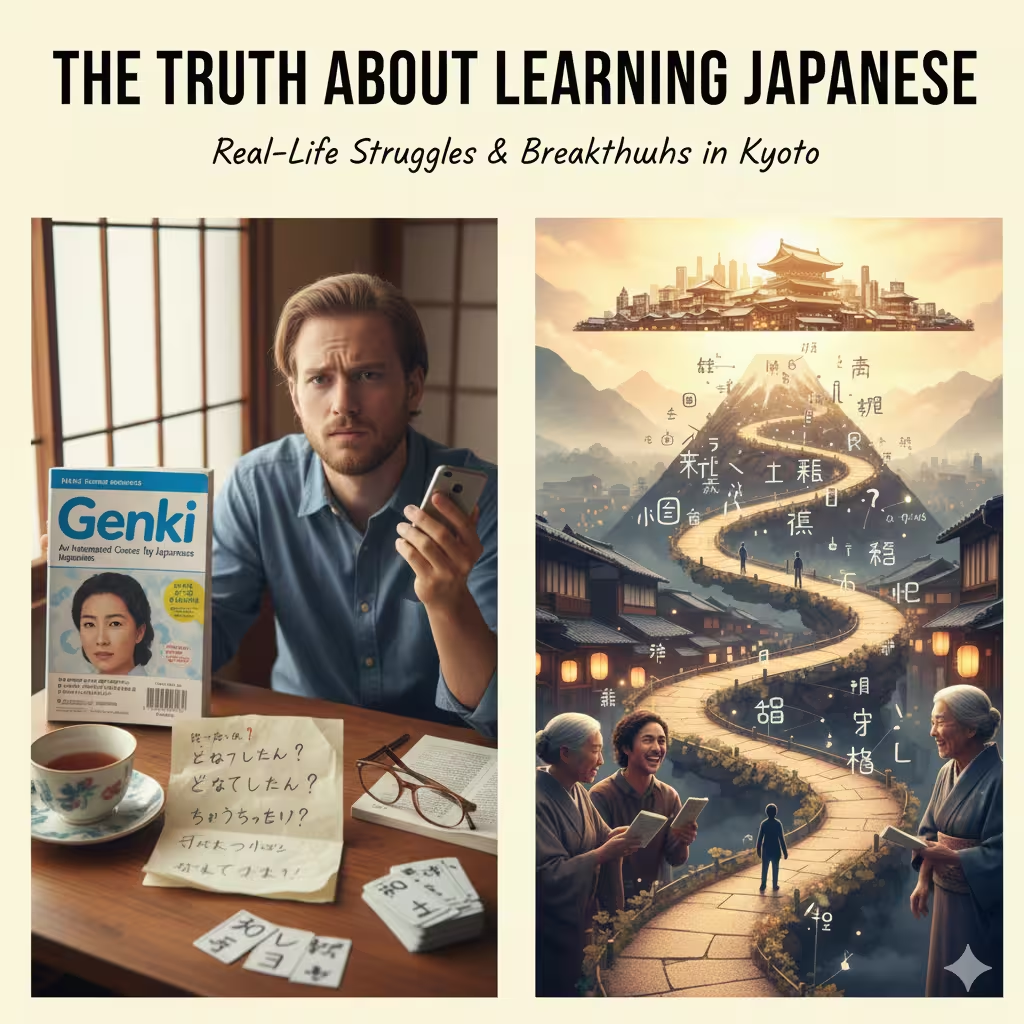
After living six years in Kyoto, I can confidently say this: learning Japanese is nothing like what textbooks prepare you for. They give you grammar charts, polite phrases, JLPT-level vocabulary… but they don’t teach you how Japanese people actually talk, react, soften disagreements, or navigate real-world situations with nuance.
If you’ve ever studied Japanese for months, then blanked when someone casually asked “どうしたん?” (What’s wrong?) or “いける?” (Can you manage?), you know exactly what I’m talking about. Japanese isn’t difficult because of kanji — it’s difficult because it’s alive. It’s flexible, contextual, emotional, and deeply tied to culture.
Today, I want to share the real experience: the mistakes, the breakthroughs, the cultural shocks, and the strategies that actually work here in Japan.
Textbooks Teach You Polite Japanese — Real Life Doesn’t
When I started studying, I thought I was doing great. I memorized full Genki chapters, practiced polite expressions like:
- “Yoroshiku onegai shimasu.”
- “Kore wa watashi no nimotsu desu.”
- “Sumimasen, mochiron desu.”
Then my first part-time job in Kyoto destroyed my confidence.
People weren’t speaking like the classroom CDs at all. They used Kansai-ben, dropped particles, shortened everything:
- “Mi toite.”
- “Dou suru?”
- “Akan de.”
- “Chotto matte ya.”
I realized that Japanese in the wild is not the Japanese in your textbook.
Textbooks give you the “public version” of the language. But the moment you enter a workplace, join a club, or start dating someone Japanese, the language changes entirely. And honestly — it’s amazing once you get used to it.
You Don’t Actually Need Perfect Japanese to Live in Japan
A surprisingly large number of foreigners live comfortably in Japan without speaking much Japanese — especially in big cities like Tokyo or Osaka. But Kyoto is different. It feels more local, more traditional, more relationship-based.
Still, here’s the truth I’ve seen over and over:
You don’t need fluent Japanese to survive — but you need it to connect.
To:
- make Japanese friends
- build trust with coworkers
- understand cultural nuances
- rent certain apartments
- avoid misunderstandings
- get promoted (related article: https://aliinjapan.com/how-foreigners-can-actually-get-promoted-in-japan/)
Language isn’t required for life here — but it unlocks Japan in a way nothing else can.
The Moment You Think You’re “Good” at Japanese, Reality Slaps You
Everyone who studies Japanese goes through the same cycle:
- “I know hiragana!”
- “I can order food!”
- “I can read signs!”
- “Wait… why can’t I understand this conversation?”
- Existential crisis.
My personal slap came at a neighborhood association meeting in Kyoto. I understood maybe 40%. The other 60% was rapid-fire Kansai dialect mixed with cultural references I had zero context for.
That day taught me something important:
Japanese isn’t just a language — it’s a set of shared experiences you slowly grow into.
Real Conversations Are Full of Hidden Meanings
In Japan, people rarely say exactly what they mean.
“Let’s think about it.”
→ Probably no.
“It might be a little difficult…”
→ Definitely no.
“That’s interesting.”
→ I disagree, but politely.
Without cultural context, even advanced learners misinterpret things.
This is why many foreigners feel lost at work (a topic I covered here: https://aliinjapan.com/the-truth-about-japanese-work-culture-overtime-hierarchy/).
Japanese communication isn’t about clarity — it’s about harmony. Once you accept that, you start understanding the real meaning behind conversations.
JLPT Isn’t Real Life (But It Helps)
Many students obsess over JLPT levels, especially N3 and N2.
Here’s my honest opinion:
JLPT ≠ communication skill.
JLPT = reading + grammar endurance test.
Does it help? Absolutely. Especially for:
- visas
- job applications
- university programs
But don’t expect the JLPT to make you fluent in conversation. Some of the most social foreigners I know never took the JLPT — yet they speak confidently because they practiced talking, not just studying.
The Emotional Side of Learning Japanese
Few people talk about this, but learning Japanese has emotional phases.
1. The Honeymoon
Everything sounds cute and exciting.
2. The Wall
Kanji. Particles. Te-form. One day everything collapses.
3. The Plateau
You understand 70% but can’t get past it.
4. The Breakthrough
You realize you can live your entire day in Japanese.
5. The Identity Shift
You start thinking in Japanese without noticing.
For me, this happened around year three in Kyoto. I stopped translating in my head. I just reacted. That’s when Japan started to feel like home.
If You Want to Improve Fast, Move Your Japanese Out of Your Textbook
Here’s what actually worked for me:
Talk to people who don’t speak English
It forces you to use Japanese naturally.
Work part-time (アルバイト)
You’ll learn real Japanese faster than any class.
Helpful reference: https://aliinjapan.com/how-to-find-a-part-time-job-arubaito-in-japan-as-a-student/
Date someone Japanese (if it happens naturally)
You learn feelings, nuance, casual expressions, soft disagreements.
Join community events
Kyoto has endless matsuri, tea workshops, and cultural classes.
Stop caring about perfect grammar
Communication > perfection.
Use Japanese social media
Twitter (now X), TikTok Japan, YouTube.
Learn phrases, not words
Japanese is chunk-based.
Outside Resources
- Japanese Government Immigration Agency (visa & JLPT requirements):
https://www.isa.go.jp/en/ - Japan Foundation (JLPT official site):
https://www.jlpt.jp/e/ - MEXT (language programs & scholarships):
https://www.mext.go.jp/en/ - Kansai-ben reference by NHK (very helpful):
https://www3.nhk.or.jp/nhkworld/en/news/backstories/1776/
Internal Links from Your Site
- Studying Japanese in Osaka — Complete Guide
https://aliinjapan.com/studying-japanese-in-osaka-the-complete-guide/ - Choosing a Japanese Language School — What Really Matters
https://aliinjapan.com/choosing-a-language-school-in-japan-what-really-matters/ - Learning Japanese in Kyoto — Language School or University?
https://aliinjapan.com/learning-japanese-in-kyoto-language-school-or-university/
Final Thoughts: Japanese Isn’t Just a Skill — It’s a Relationship
If there’s one message I want you to take from this article, it’s this:
You don’t “master” Japanese. You grow with it.
The more you understand life in Japan — the culture, the habits, the subtle communication style — the easier the language becomes.
After six years in Kyoto, Japanese isn’t something I “study” anymore.
It’s just a part of my daily rhythm:
- The greeting to my neighbor
- The small talk at the convenience store
- The way people soften their words
- The casual “おおきに” in Kansai-ben
- The comfortable silence between friends
And honestly, that’s the most rewarding part.
Discover more from Ali in Japan
Subscribe to get the latest posts sent to your email.