Japan’s healthcare system is famous for being efficient, organized, and surprisingly affordable — but when you’re a foreigner, especially in your first few years, it can feel confusing and intimidating. I still remember my first clinic visit in Kyoto: I didn’t know where to go, how much it would cost, what documents I needed, or even how to describe my symptoms properly in Japanese.
After six years living here, and more doctor visits than I expected (hello, seasonal allergies), I’ve developed a clear understanding of how the Japanese healthcare system actually works from the inside — not the vague descriptions you see online.
This guide is for anyone living in Japan or planning to move soon. I’ll break everything down in simple, honest, real-life terms, with verified information and official sources.
If you’re interested in how Japan’s culture affects everyday life, you might also like this earlier post:
The Unwritten Rules of Living in Japan
https://aliinjapan.com/the-unwritten-rules-of-living-in-japan/
Because yes — those “unwritten rules” absolutely apply inside hospitals too.
Understanding Japan’s Healthcare System (The Basics You Need to Know)
Japan’s healthcare system is built around two mandatory insurance types:
1. National Health Insurance (NHI – 国民健康保険)
For students, freelancers, part-time workers, or anyone not fully employed by a company in Japan.
2. Employees’ Health Insurance (社会保険 / Shakai Hoken)
For full-time company workers.
Your employer and you split the cost.
Both systems provide similar coverage. You pay:
- 30% of treatment costs (the government covers the remaining 70%).
- Sometimes 10–20% for children or seniors.
This 30% rule is official and confirmed by the Ministry of Health, Labour, and Welfare (MHLW):
https://www.mhlw.go.jp/english/
Is Japanese Healthcare Cheap?
Short answer: yes, shockingly cheap compared to the U.S. or many parts of Europe.
Here’s what I normally pay in Kyoto:
- Doctor’s visit: ¥1,000–¥3,000
- Prescription medicine: ¥500–¥1,500
- Blood test: ¥1,000–¥3,000
- X-ray: around ¥1,000–¥2,000
These prices come from personal experience and align with data from the Japan Health Insurance Association:
https://www.kyoukaikenpo.or.jp/
Even without insurance (rare for residents), costs are still much lower than many countries, but having insurance is both mandatory and extremely helpful.
Choosing the Right Clinic or Hospital (This Part Is “Very Japan”)
You don’t go to a general doctor for everything in Japan.
Instead, clinics are hyper-specialized:
- Ear, nose, throat (ENT)
- Orthopedic
- Ophthalmology
- Dermatology
- Internal medicine
- Gastroenterology
- Pediatrics
- Dental clinics
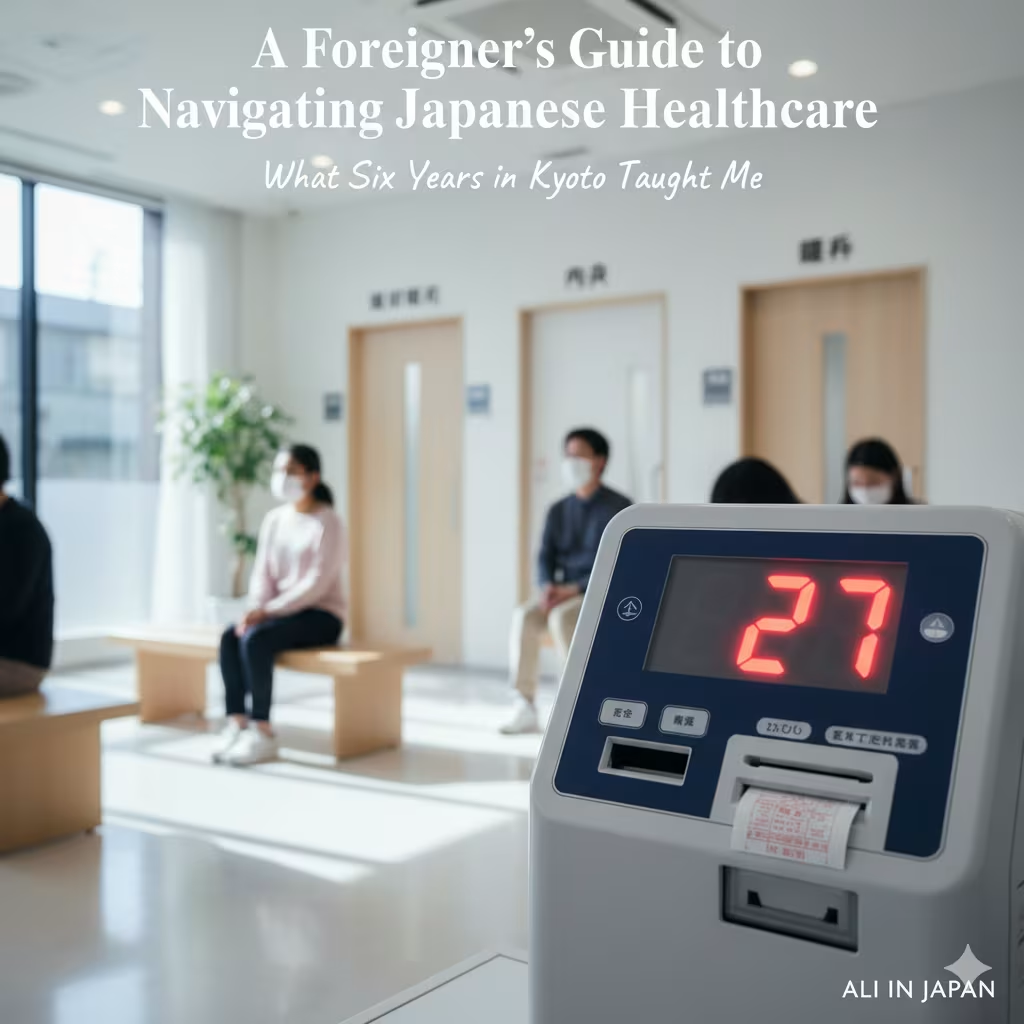
Most clinics accept walk-ins — no appointment — which shocked me at first. You take a number, sit quietly, and wait. Things run efficiently, even when crowded.
When You Need a Bigger Hospital
If your symptoms are serious, clinics may refer you to a larger hospital (総合病院). These hospitals often require:
- Appointments
- Referral letters (紹介状)
- Longer waiting times
But the quality of care is high.
What to Bring to Every Appointment
You’ll need:
- Insurance card (健康保険証 / hokenshō)
- Residence card (not always required, but helpful)
- Cash (many clinics don’t accept credit cards)
- Medication notebook (お薬手帳)
- Mask (still expected in healthcare settings)
If you have allergies or chronic conditions, it helps to write them down in Japanese.
My First Healthcare Experience in Kyoto (A Reality Check)
On my third month in Kyoto, I caught a bad cold but didn’t know where to go. A coworker told me:
“Just find an internal medicine clinic. There’s one on every block.”
He wasn’t joking.
I walked into a tiny clinic run by a single doctor in his late 60s. There was no English anywhere. The nurse spoke a little, enough to ask:
“Insurance card, please?”
The doctor examined me, gave me three types of medicine (yes, Japan loves giving multiple small-dose medications), and I paid ¥1,400 total.
I walked out thinking: How is this system so cheap and so fast?
It was my first real taste of how streamlined Japanese healthcare can be.
Language Barriers: The Part You Have to Prepare For
Even in Kyoto — a city with many foreigners — not every clinic offers English support. I’ve had experiences where:
- The nurse used Google Translate
- The doctor spoke slowly but only in Japanese
- The clinic gave me forms I couldn’t read
- I misunderstood medical terms
If you’re struggling with communication in daily life in Japan, you may find this post helpful:
Why Japanese People Don’t Say “I Love You”
https://aliinjapan.com/why-japanese-people-dont-say-i-love-you-and-what-they-say-instead/
It explains indirect communication — which you’ll absolutely feel in hospitals.
How to Make Visits Easier
Write down:
- Symptoms
- Pain location
- When it started
- Allergies
- Medical history
In simple Japanese.
Or bring a Japanese friend. It helps more than you realize.
Medicine in Japan: What Foreigners Need to Know
Japan is conservative with medication. If you’re used to strong Western medicine, Japanese prescriptions might feel mild.
For example:
- Painkillers are weaker
- Cough medicine is gentle
- Antibiotics are used less often
Drugstores (ドラッグストア) are everywhere and carry:
- Cold medicine
- Eye drops
- Allergy pills
- Bandages
- Supplements
But the pharmacist may ask questions before selling certain medicines.
Emergency Care in Japan (And How to Actually Use It)
Here’s something many foreigners don’t know:
Japan’s ER is not like Western ER
It’s for true emergencies only.
You can call:
- 119 for an ambulance (free)
- They take you to the nearest hospital with availability
Ambulances are free, but treatment costs are not — though still affordable with insurance.
Official emergency information is available here:
Japan Fire and Disaster Management Agency
https://www.fdma.go.jp/
Mental Healthcare in Japan
Mental health awareness is growing in Japan, but services are still limited compared to Western countries.
Counseling can be:
- expensive
- hard to find in English
- fully booked
However, larger cities like Kyoto, Osaka, and Tokyo have English-speaking therapists.
The MHLW also provides directories of mental health support centers.
When You Need Long-Term Care or Specialist Treatment
Japan offers excellent specialist care, but it often requires:
- referrals
- waiting
- multiple visits
If you’re planning to stay long-term, I recommend reading:
Why Foreigners Stay in Japan Longer Than Planned
https://aliinjapan.com/why-foreigners-stay-in-japan-longer-than-planned-the-japan-effect/
It covers many lifestyle factors that affect long-term healthcare decisions too.
Cultural Differences You’ll Notice Immediately
1. Quiet Waiting Rooms
No loud conversations.
No phones ringing.
Everyone sits patiently.
2. Incredible Efficiency
Once your number is called, things move fast.
3. Over-the-Top Cleanliness
Japan’s clinics are spotless — even small ones.
4. Respectful Communication
Doctors often speak gently and politely, even when delivering difficult news.
Tips Every Foreigner Should Know
1. Always Join Health Insurance
It’s mandatory and will save you a lot of money.
2. Keep Cash With You
Many clinics still don’t accept cards.
3. Visit Clinics Early in the Morning
Wait times are shorter.
4. Don’t Expect Western-Style Medication
Adjust your expectations.
5. Keep Your Documents in One Folder
It makes every visit easier.
Final Thoughts After Six Years in Kyoto
Japan’s healthcare system may feel confusing at first, especially if you’re used to English-speaking countries or more direct communication. But once you understand how it works, it becomes one of the easiest parts of life in Japan.
Affordable care, professional staff, clean facilities, and an organized system make medical visits surprisingly stress-free — as long as you know what to expect.
Living in Kyoto taught me that Japan’s healthcare is not just efficient; it’s a reflection of Japanese culture itself: calm, systematic, and quietly reliable.
Discover more from Ali in Japan
Subscribe to get the latest posts sent to your email.