
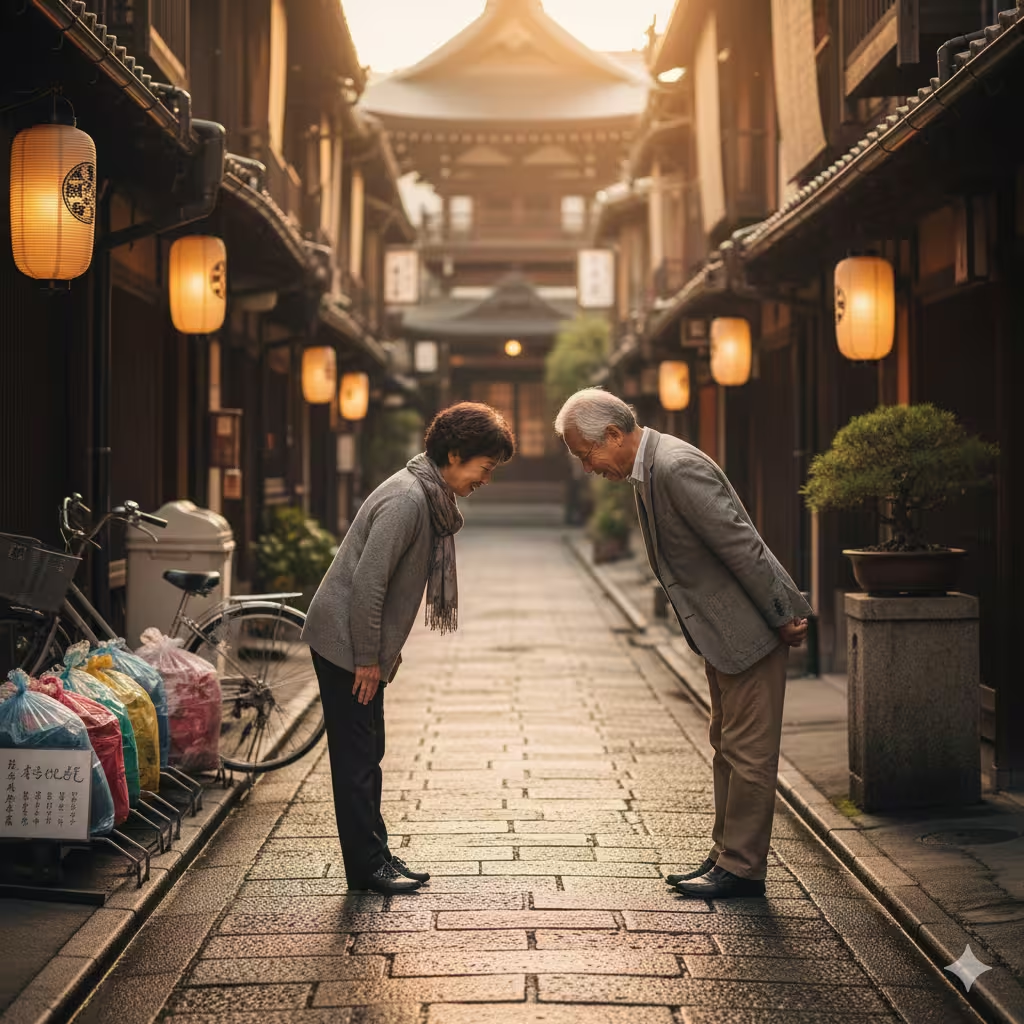
I’ve lived in Kyoto for six years now, and in that time I’ve learned that Japan has a way of dealing with neighbors that feels almost the opposite of what I grew up with. There’s no yelling from balconies, no passive-aggressive sticky notes in the hallway, no heated parking-lot arguments. Instead, there’s something quieter and more intentional: a shared understanding that harmony is more valuable than “being right.”
At first, this silence felt confusing. Were people shy? Afraid of conflict? Avoiding me because I was a foreigner? Over time, through small mistakes, conversations with locals, and guidance from neighborhood associations, I learned that the silence is actually a social system. And once you understand it, daily life in Japan becomes much easier — even comforting.
What “Meiwaku” Really Means (and Why It Matters)
One word explains a huge part of Japanese behavior: meiwaku (迷惑).
The usual English translation is “inconvenience” or “nuisance,” but that doesn’t capture its emotional weight. Meiwaku is about avoiding causing trouble for others — not just avoiding noise, but avoiding discomfort, awkwardness, and unnecessary stress.
Once you understand meiwaku:
- The quietness makes sense
- The politeness makes sense
- The lack of confrontational complaining makes sense
It’s not about hiding feelings; it’s about maintaining smooth social relationships.
Harmony, Face, and the Power of Indirect Communication
Another key cultural idea is wa (和) — social harmony. Confrontation, even justified, is seen as something that breaks wa. So instead of knocking on a neighbor’s door and saying, “You’re being too loud,” people choose gentler ways:
- A polite notice from the building manager
- A suggestion from the neighborhood association
- An indirect reminder instead of direct criticism
Even everyday Japanese expressions reflect this. For example, “sumimasen” can mean:
- Sorry
- Excuse me
- Thank you
It’s not just a word — it’s a social tool. When people use it, they’re often acknowledging the possibility of causing meiwaku.
Kyoto-Specific Customs That Foreigners Often Miss
Living in Kyoto taught me that even small things matter. And no, locals aren’t watching you like hawks — they’re simply committed to a shared standard.
1. Garbage Rules
Kyoto has detailed waste-sorting rules. Correct bag color, correct day, correct category. If trash is incorrect, the city simply does not collect it — it stays there until fixed.
Helpful internal post:
How to Survive Japanese Rules Without Going Crazy
https://aliinjapan.com/why-japan-loves-rules-and-how-foreigners-can-actually-adapt-without-going-crazy/
2. Noise Awareness
Noise after 10 PM (sometimes even after 9 PM) is considered inconsiderate. Moving furniture late at night, playing music, or hosting friends without a heads-up is a quick way to create tension — even if nobody says anything.
3. Shared Spaces
Corridors, bike parking areas, and stairwells are communal. Leaving anything outside your door — shoes, boxes, or bicycles — can be frowned upon.
4. Greetings
A simple “ohayō gozaimasu” or “konnichiwa” to your neighbors builds huge goodwill. Even people who never start conversations appreciate this acknowledgement.
My First Mistakes (and What They Taught Me)
• The Garbage Bag Incident
In my first month, I put my burnable trash out the night before. It was still there in the morning. A neighbor left a polite note explaining the schedule and where to find the official bags.
It wasn’t scolding. It was guidance — and it saved me from repeating the mistake.
• Birthday Party at Home
I once invited five friends over. We weren’t loud, but in Japanese apartments, sound carries. A week later, the building manager approached me and gently mentioned “please be mindful of noise at night.” No confrontation — just calm mediation.
• The Bicycle in the Corridor
I left my bike outside my door for just one night. The next morning, a small paper flyer reminding residents to keep the corridor clear was slipped under my door. Anonymous, polite, and effective.
Each experience taught me more than any guidebook could.
When People Do Complain — How It Happens
Complaints are rare, but when they do happen, they usually follow this pattern:
- The neighbor tells the building manager
- The manager contacts you
- If needed, the local neighborhood association (chōnaikai) gets involved
- You receive a polite notice or suggestion
It’s structured, non-confrontational, and meant to protect everyone’s dignity.
This system prevents arguments and helps maintain long-term peace — something Japan is remarkably good at.
How to Be a Great Neighbor in Japan (A Simple Checklist)
Here’s what I learned after six years in Kyoto:
- Follow the garbage schedule religiously
- Avoid noise late at night
- Inform neighbors if you plan to have guests
- Keep shared spaces clear
- Learn basic greetings
- Ask the building manager if you’re unsure about a rule
- When in doubt, choose the considerate option
These small habits make life smoother — and people appreciate your effort more than you might realize.
Most Common Mistakes Foreigners Make
These missteps are extremely common but very easy to fix:
- Thinking silence means “it’s fine”
- Misunderstanding the role of apologies
- Assuming small rules don’t matter
- Forgetting that walls are paper-thin
- Treating neighbors like strangers instead of a community
Japan doesn’t expect perfection — just awareness.
Internal Links (Related Articles on My Blog)
These naturally fit into the topic and help SEO:
- The Unwritten Rules of Living in Japan
https://aliinjapan.com/the-unwritten-rules-of-living-in-japan/ - Why Japan Loves Rules (and How to Adapt)
https://aliinjapan.com/why-japan-loves-rules-and-how-foreigners-can-actually-adapt-without-going-crazy/ - Train Etiquette in Japan
https://aliinjapan.com/the-unspoken-rules-of-riding-trains-in-japan/
Final Thoughts — Understanding Japan’s Quiet System
When I first moved to Kyoto, the silence felt intimidating. Now it feels comforting. People aren’t avoiding confrontation because they’re timid — but because they value community peace.
Japan’s “silent agreement” works because everyone participates:
- People avoid causing trouble
- People avoid escalating problems
- People respect each other’s privacy
- And when issues do arise, they’re handled through established channels
The result? A neighborhood where life feels calm, predictable, and safe.
Live here long enough, and this quiet way of handling things starts to feel not just normal — but beautiful.
Discover more from Ali in Japan
Subscribe to get the latest posts sent to your email.