
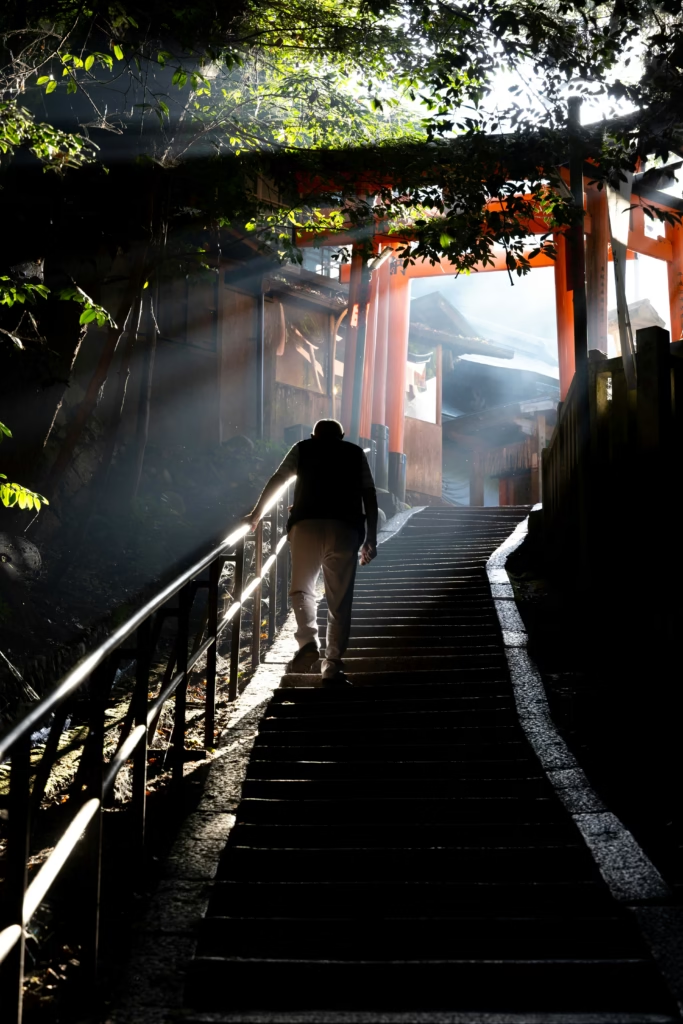
When I first arrived in Japan, I thought peace meant silence.
Then I visited Kiyomizu-dera in Kyoto on a Sunday — packed with tourists, school trips, and the scent of sweet matcha drifting from nearby shops — and yet, somehow, I felt still.
It’s strange how Japanese temples manage to create calm in the middle of chaos. Even after five years living here, I still feel it every time I step through a temple gate. It’s not just architecture — it’s a mindset.
⛩️ The Magic Starts at the Gate (Torii and Sanmon)
Every temple visit begins with a kind of transition — you pass through a torii or sanmon gate, and suddenly the outside world fades away.
The noise of the city — traffic, conversation, construction — seems to stop at the gate.
It’s not superstition; it’s design.
The path beyond is intentionally winding, the sounds shift from mechanical to natural — birds, wind, bamboo.
Japan has mastered the art of engineering stillness.
When I walk through the gates of Nanzen-ji, just minutes away from Kyoto’s busy streets, it feels like stepping into another world.
Related: 🏡 How Japanese Minimalism Changed My Life (And Why the West Got It Wrong)
🪷 Simplicity That Speaks Volumes
Japanese temples don’t shout spirituality — they whisper it.
They’re rarely decorated in gold or covered in icons. Instead, they’re made of aged wood, tatami, moss gardens, and silence.
This simplicity is rooted in the idea of Wabi-Sabi — finding beauty in imperfection.
A crack in a wall, a fading paint stroke, or an uneven stone path isn’t seen as a flaw — it’s part of the story.
As a Westerner used to perfection and polish, it took me years to truly appreciate that kind of quiet beauty.
See also: 🧘♀️ The Japanese Concept of Wabi-Sabi: Finding Beauty in Imperfection
🌳 Nature and Architecture in Perfect Balance
The line between temple and nature in Japan is deliberately blurred.
You’ll see trees growing through stone steps, koi ponds beside prayer halls, and wooden structures that breathe with the seasons.
When I visited Eikan-dō in Kyoto during autumn, the maple leaves fell so slowly that even time seemed to move differently.
That moment — a leaf drifting over the pond — was more spiritual than any sermon I’d ever heard.
This harmony between structure and nature is a reflection of Shinto influence — the belief that divinity exists in natural elements.
🔔 The Sound of Stillness
Temples in Japan use sound as silence’s partner.
The low resonance of a bonshō (temple bell) can carry through the air for minutes, filling the space without overwhelming it.
I remember hearing the bell of Chion-in one New Year’s Eve.
The 108 chimes represent the 108 human desires — a Buddhist way of cleansing the heart before the new year.
Standing there among locals, everyone quiet, hands together, breath misting in the winter air — it was a kind of unity I’d never experienced before.
Learn more: Tokyo National Museum – Buddhist Bells Exhibition
🙏 The Rituals That Slow You Down
Temples encourage you to move deliberately.
You bow before entering, rinse your hands at the chōzuya, remove your shoes, and walk slowly on tatami floors.
It’s not just etiquette — it’s mindfulness in motion.
Every step has purpose. Every breath feels intentional.
When I first started doing these rituals, they felt performative. But over time, they became grounding — small pauses that reminded me to exist here, now.
🕯️ The People Who Visit (and What They Teach You)
Unlike tourist sites in other countries, most visitors to Japanese temples aren’t just there for photos.
You’ll see office workers bowing before a small shrine, teenagers buying good luck charms, elderly couples meditating quietly.
Everyone, regardless of faith, shares that same calm respect.
One afternoon at Kōdaiji, I met a local man who told me,
“Temples are not for religion — they’re for returning to yourself.”
I’ve never forgotten that.
Related: 🏮 The Unwritten Rules of Living in Japan (That Foreigners Always Learn the Hard Way)
🌅 What Japanese Temples Teach Us About Life
If Japan has taught me anything, it’s that peace isn’t found in isolation — it’s cultivated through awareness.
Temples are living reminders that simplicity, respect, and connection to nature can create serenity even in a crowded city.
So next time you visit Japan — don’t just take photos.
Walk slowly. Listen to the wind. Feel the wood beneath your feet.
You’ll understand why Japanese people carry that same quiet discipline into their daily lives.
Discover more from Ali in Japan
Subscribe to get the latest posts sent to your email.